Watching your baby’s first tooth break through the gums is exciting, but it also brings a lot of questions. At Pediatric Dentistry on Kimball in Brooklyn, NY, parents ask us almost daily what a typical baby teething timeline looks like and how to tell normal fussiness from something that needs a closer look. Most babies get their first tooth between four and seven months old, and the full set of 20 primary teeth usually arrives by around age three. Below, we walk through what to expect at each stage, the symptoms worth watching for, and simple ways to keep your little one comfortable, plus how our pediatric dental services support healthy smiles from that very first tooth.
This Article Will Address
- When teething usually begins and which teeth come in first
- The most common signs and symptoms of teething
- How long teething lasts, tooth by tooth and overall
- Safe, simple ways to soothe your baby’s discomfort
- The right age for your baby’s first dental visit
- What it means if teeth arrive out of order or later than expected
When Do Babies Start Teething?
Most babies get their first tooth between four and seven months old, though it’s completely normal for teething to start as early as three months or as late as twelve months. If your baby hasn’t shown any signs by their first birthday, it’s worth mentioning at their next checkup, but a later start on its own usually isn’t a cause for concern. Every baby develops on a slightly different timeline, and genetics tend to play a bigger role in when that first tooth arrives than anything a parent is doing right or wrong.
Primary teeth tend to follow a fairly predictable tooth eruption chart, even though the exact timing varies from baby to baby:
- Lower central incisors, the two bottom front teeth, usually arrive first, around 6 months
- Upper central incisors follow about 4 to 8 weeks later
- Upper and lower lateral incisors, the teeth next to the front ones, come in over the following months
- First molars, used for grinding food, typically erupt between 13 and 19 months
- Canines, the pointy eyeteeth, usually follow between 16 and 22 months
- Second molars round out the set, often between 25 and 33 months
By age three, most children have all 20 primary teeth, giving them the full smile they’ll rely on until permanent teeth start arriving around age six. Knowing this general order can help you anticipate which symptoms to expect next, even though no two babies move through it at exactly the same pace.
What Are the Signs and Symptoms of Teething?
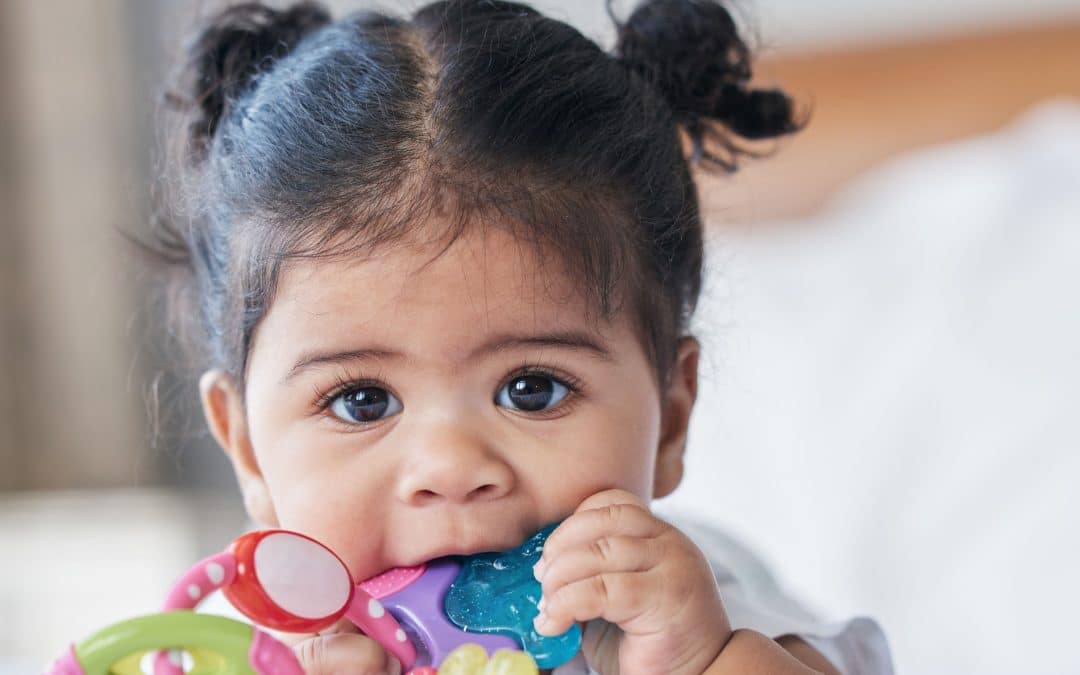
The most common signs of teething are increased drooling, a strong urge to chew on anything within reach, and swollen or tender gums. Some babies barely notice teething at all, while others go through stretches of crankiness, disrupted sleep, and reduced interest in eating.
Common teething symptoms include:
- Excess drooling, sometimes enough to cause a mild rash around the chin and mouth
- Constant chewing or gnawing on fingers, toys, or teething rings
- Swollen, red, or tender gums, especially right before a tooth breaks through
- Irritability or crying spells that come and go
- Mild disruption to sleep or appetite
- A slightly higher body temperature, without a true fever
Teething can raise your baby’s temperature slightly, but it doesn’t typically cause a high fever, vomiting, or diarrhea. If your baby develops a fever over 100.4°F, seems seriously unwell, or has symptoms that last more than a day or two, those signs usually point to something other than teething, and it’s worth calling your pediatrician to rule out illness.
How Long Does Teething Last?
Each individual tooth usually takes about a week to fully emerge, with any discomfort concentrated in the few days right before and the few days after it breaks through the gum line. The overall process, however, stretches out much longer than that.
From the first tooth to the last, teething typically spans from around 6 months of age until close to a child’s third birthday, since all 20 primary teeth don’t arrive at once. Parents often notice the process comes in waves: a tooth or two erupts, things settle down for a while, and then another round begins as the next teeth get ready to come through. Molars and canines, which are larger and have to push through more gum tissue, tend to cause more noticeable discomfort than the smaller front teeth. Knowing that teething happens in stages, rather than as one long stretch of fussiness, can make the months ahead feel a lot more manageable.
How Can I Soothe My Baby’s Teething Pain?
Gently rubbing your baby’s gums with a clean finger or offering something safe to chew on are usually the most effective ways to ease teething discomfort. A cool, damp washcloth or a chilled, not frozen, teething ring can also provide relief without the risks that come with some over-the-counter products.
Safe teething remedies to keep in mind include:
- Rubbing your baby’s gums gently with a clean finger for a minute or two
- Offering a clean, wet washcloth that’s been chilled in the refrigerator
- Using a solid rubber teething ring chilled in the refrigerator, not the freezer
- Wiping away drool frequently to prevent skin irritation around the mouth and chin
- Asking your pediatrician about an appropriate dose of acetaminophen or ibuprofen for babies over 6 months if discomfort is significant
A few things are worth avoiding altogether. Teething necklaces and bracelets can pose a choking or strangulation risk and shouldn’t be used, even the amber varieties marketed as natural. Topical teething gels and homeopathic tablets aren’t recommended either, since some contain ingredients that aren’t considered safe for infants. Once that first tooth appears, keep it clean by brushing gently with a soft-bristled brush and a tiny smear of fluoride toothpaste twice a day. As more teeth come in, your pediatric dentist can also recommend a professional fluoride treatment to add extra protection against early decay.
What Age Should My Baby See a Dentist for the First Time?
Your baby should see a dentist by their first birthday or within six months of their first tooth coming in, whichever happens first. This recommendation comes from both the American Dental Association and the American Academy of Pediatric Dentistry, and it holds even if your baby’s teeth look perfectly healthy.
Early visits matter because they let your dentist catch potential concerns before they become bigger problems, and they help your baby get comfortable with the dental chair long before more involved treatment is ever needed. At Pediatric Dentistry on Kimball, Dr. Vera builds these first appointments around comfort and education rather than a long list of procedures. A typical infant dental evaluation includes a gentle look at your baby’s gums and emerging teeth, guidance on brushing and feeding habits, and answers to whatever questions you’ve been saving up.
This visit is also a great time to talk through the broader picture of early dental care, including how your baby’s diet, bottle habits, and brushing routine all affect their growing smile. Starting this relationship early tends to make every future visit easier, since your child grows up seeing the dentist’s office as a familiar, friendly place rather than something new and unsettling.
What if My Baby’s Teeth Come in Out of Order or Are Late?
A little variation in the order or timing of your baby’s teeth is normal and usually nothing to worry about. Genetics play a large role in when teeth erupt, so if you or your partner got your first tooth later than average, your baby might follow a similar pattern.
That said, a few situations are worth checking with your dentist:
- No teeth have appeared by 18 months of age
- Teeth are coming in with noticeable spacing or crowding concerns
- A tooth looks discolored, unusually shaped, or seems stuck partway through the gum
- Your baby seems to be in significant pain that goes beyond typical teething discomfort
In most cases, an out-of-order timeline just means your baby’s own growth pattern is a little different from the general chart, not that anything is wrong. A quick evaluation can offer peace of mind either way, and it gives your dentist a chance to keep an eye on things as your child continues to grow.
Book Your Baby’s First Dental Visit at Pediatric Dentistry on Kimball
Every baby moves through teething at their own pace, and having a dental team you trust nearby makes the whole process easier. Pediatric Dentistry on Kimball welcomes families throughout Brooklyn, NY, and we would love to help you navigate your child’s first teeth, first checkup, and everything in between. Our office is currently welcoming new patients and appointment requests. If your baby is due for their first visit, or you simply have questions about what you are seeing at home, contact our office to schedule an appointment. We are here to make your child’s very first dental experience a positive one.
Sources

Dr. Lionel Vera
Dr. Lionel Vera brings warmth, expertise, and advocacy to Pediatric Dentistry on Kimball as a board-certified pediatric dentist. He earned his dental degree from the University of Puerto Rico, Medical Science Campus, followed by a residency at Kingsbrook Jewish Medical Center, where he honed his skills with children and special needs patients. A Brooklyn-based pediatric dentist since 2018, Dr. Vera blends compassionate care with a strong focus on educating both children and parents about oral health. Dr. Vera’s mission: to inspire a lifetime of healthy smiles through trust, education, and proactive care.