Your baby’s first infant oral evaluation is a short, gentle visit in which a pediatric dentist checks the gums, any emerging teeth, the tongue, and early jaw development, then spends much of the time answering your questions about feeding, teething, and cleaning. There are no drills and no long procedures, and many babies spend most of the visit in a parent’s lap. For families in Brooklyn, NY, this appointment is often the first time a dentist meets their child, and it tends to raise questions, especially if your baby has only one tooth or none at all. What follows walks through the visit step by step so you know what to expect before you arrive.
The American Academy of Pediatric Dentistry and the American Academy of Pediatrics both recommend a first dental visit by the first birthday, or within six months of the first tooth appearing. That timing can sound early. Tooth decay in toddlers is common, though, and it often starts with habits that seem harmless, like a bedtime bottle or a sippy cup of juice carried around all afternoon. Babies are born with all 20 primary teeth already forming in the jaw, and the first ones usually break through around six months of age. An early visit also gives your child a dental home: one office that knows your child’s history, tracks how teeth come in, and is ready if a question or an injury comes up later.
Pediatric Dentistry on Kimball was built around these early visits. Our approach to early dental care for babies and toddlers keeps the first appointment unhurried, with soft lighting, tools kept in plain view, and time set aside just for your questions. Dr. Lionel Vera completed his pediatric dental residency at Maimonides Medical Center and is board certified by the American Board of Pediatric Dentistry, so caring for infants is part of his specialty training. One father wrote that Dr. Vera saw their newborn and stayed patient through every question the family brought. You should leave this visit with clear answers and a plan you can start that same evening.
This Article Will Address
- What this early checkup is and why it happens by age one
- The specific things the dentist looks at
- What the visit looks like if your baby has no teeth yet
- Practical advice on brushing, teething, and feeding
- How often to come back after the first visit
What Is an Infant Dental Evaluation, and Why Is It Recommended So Early?
An infant dental evaluation is a baby’s first checkup with a dentist, usually scheduled by the first birthday, that pairs a quick look at the mouth with personalized guidance for parents. It is recommended early because the habits that lead to cavities in toddlers, such as nursing or bottle-feeding to sleep, begin long before most parents think about the dentist. New baby teeth have thinner enamel than adult teeth, so decay can move quickly once it starts. Catching a chalky white spot at 10 months means a short conversation about home care. Finding a cavity at age three may mean a filling. The visit also lets your child meet the sights and sounds of a dental office while the stakes are low.
What Does the Dentist Actually Check During a Baby’s First Visit?
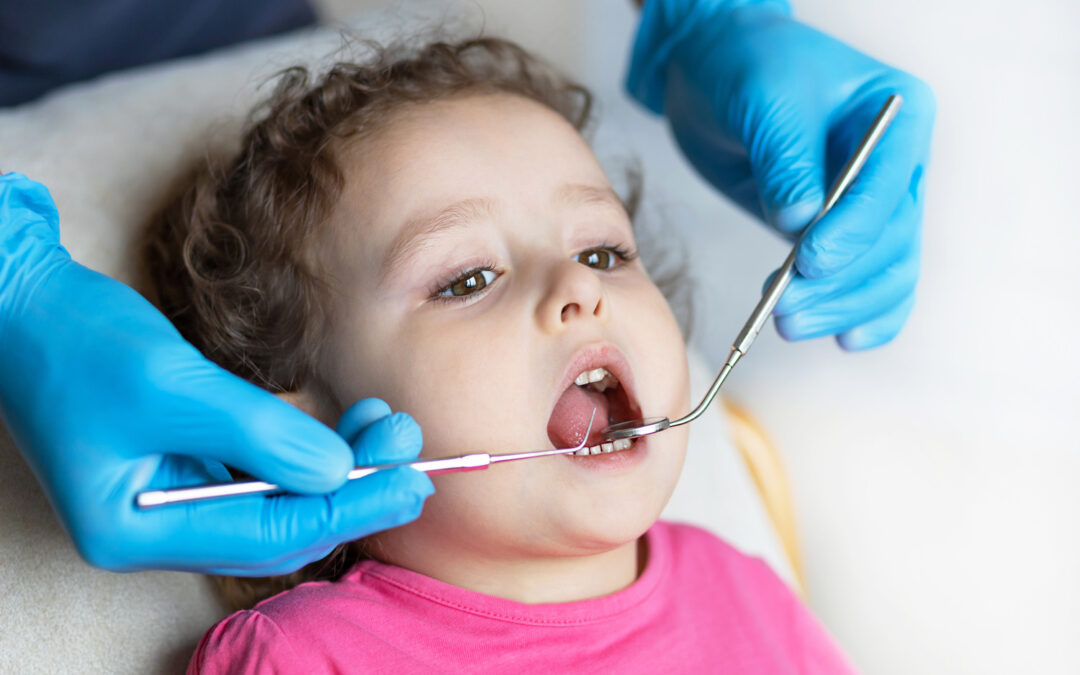
The dentist checks your baby’s gums, teeth, tongue, lips, palate, and jaw for healthy development and any early signs of decay. During our infant dental evaluations, the exam usually happens in a knee-to-knee position, with your baby lying back across your lap and the dentist’s so your child can see you the entire time. The dentist will typically look for:
- White spots or brown areas along the gumline that can signal early decay
- How teeth are erupting and whether spacing looks on track
- The tongue and lip attachments, which can affect feeding and later speech
- Signs of injury, which become common once babies start pulling up and cruising
- Any effect a pacifier or thumb-sucking habit is having on the palate
Crying during the exam is normal and actually makes it easier to see inside the mouth. It does not mean the visit went badly.
What Can I Expect if My Baby Has No Teeth Yet?
Expect a shorter exam focused on the gums, jaw, and soft tissues, followed by a longer conversation about what comes next. Plenty of babies have no teeth by their first birthday, and a toothless visit still has real value. Dr. Vera can feel for teeth moving beneath the gums, check small bumps or cysts that sometimes appear on infant gums, and see how the jaws are growing. Much of the time goes toward preparing you: when to expect the first teeth, which signs of teething are normal, and how to clean the gums now so brushing feels familiar later. Many parents find this the most relaxed visit of all, since there is nothing to treat and plenty to plan.
What Guidance Will I Get on Brushing, Teething, and Feeding?
You will leave with specific, practical steps in each of these areas, matched to your baby’s age and habits. The core advice follows guidance from the American Dental Association and the American Academy of Pediatrics.
Brushing and Cleaning Baby Teeth
Before teeth appear, wipe the gums with a clean, damp cloth or gauze pad after feedings. Once the first tooth arrives, brush twice a day with a soft infant toothbrush and a smear of fluoride toothpaste no larger than a grain of rice. When two teeth touch, start flossing between them. The dentist can also tell you whether a professional fluoride treatment makes sense for your child.
Soothing Teething Safely
- Rub sore gums with a clean finger, or offer a chilled washcloth or a solid rubber teether.
- Skip liquid-filled teething rings, which can break open.
- Avoid numbing gels containing benzocaine or lidocaine, homeopathic teething tablets, and amber teething necklaces, all of which carry serious safety warnings.
- Call your pediatrician if your baby runs a fever over 100.4 degrees, since a true fever points to illness rather than teething.
Feeding Habits That Protect New Teeth
Avoid putting your baby to bed with a bottle of milk, formula, or juice, since the sugars pool around the teeth overnight. Offer water between meals, begin practicing with an open cup around six months, and keep juice to a minimum. If you are breastfeeding, the dentist can talk through nighttime feeds and how to wipe the teeth afterward.
How Often Should My Baby Come Back After the First Visit?
Most babies return every six months, though the dentist may suggest a different interval based on your child’s cavity risk. A baby with early white spots, a strong family history of decay, or frequent nighttime feeds may benefit from closer follow-up, while a low-risk child can stay on a standard schedule. Each return visit builds on the last. The dentist tracks new teeth as they erupt, updates home care advice as your child moves to solid foods and a cup, and slowly introduces simple steps like counting teeth or a toothbrush cleaning. By the time your child is ready for a full cleaning, the office already feels familiar. Our children’s dental services grow with your child from that first visit through age 12.
Book Your Baby’s First Dental Checkup with Dr. Vera
If your baby’s first birthday is approaching or a first tooth has just appeared, Pediatric Dentistry on Kimball would love to meet your family. We welcome infants of every age in Brooklyn, NY, with after-school and weekend hours that work around naps and work schedules. Call (718) 253-0888, stop by the front desk, or send a request through our contact page to schedule. After you book, we will send new patient forms you can fill out on your phone, so the morning of the visit stays calm for you and your little one.
Sources

Dr. Lionel Vera
Dr. Lionel Vera brings warmth, expertise, and advocacy to Pediatric Dentistry on Kimball as a board-certified pediatric dentist. He earned his dental degree from the University of Puerto Rico, Medical Science Campus, followed by a residency at Kingsbrook Jewish Medical Center, where he honed his skills with children and special needs patients. A Brooklyn-based pediatric dentist since 2018, Dr. Vera blends compassionate care with a strong focus on educating both children and parents about oral health. Dr. Vera’s mission: to inspire a lifetime of healthy smiles through trust, education, and proactive care.